

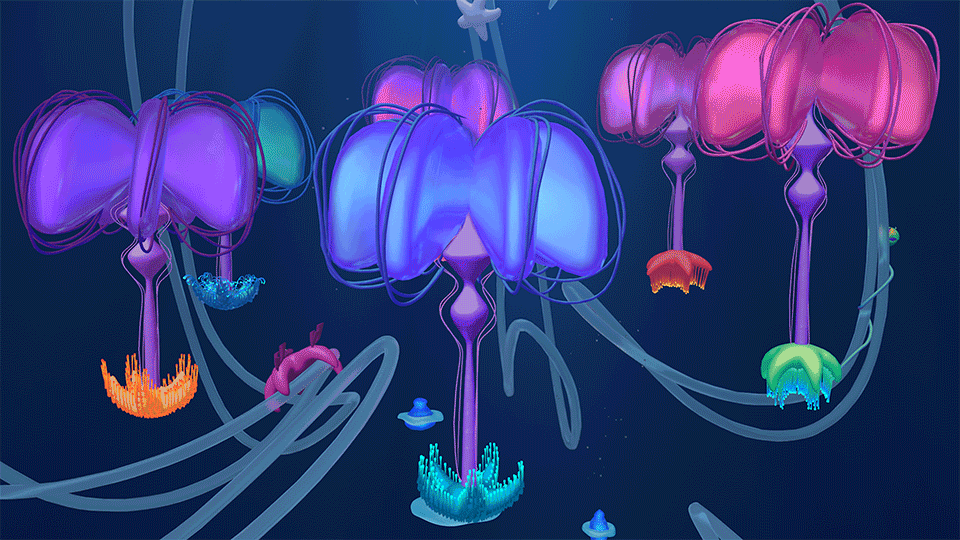
This short film submerges the viewer into a 3D aquatic environment that toys with their imagination and invites them to rethink the symbiosis of fantastical marine creatures.
All elements in this short film were modeled and animated by members of The Minty Lab.


The Extraordinary World
Beneath the Surface
Watch it Here
THE PROCESS

Concept

3D Modeling

Environment
1 - Concept Design
The Extraordinary World Beneath the Surface is a short film meant to celebrate the organic and unique symbiosis of the creatures of the sea in a magical way. Though it is fantasy, it is still grounded in realism, and lots of research was conducted to understand the connection between organisms and they role they play in sustaining their environment.
See the original sketch below.

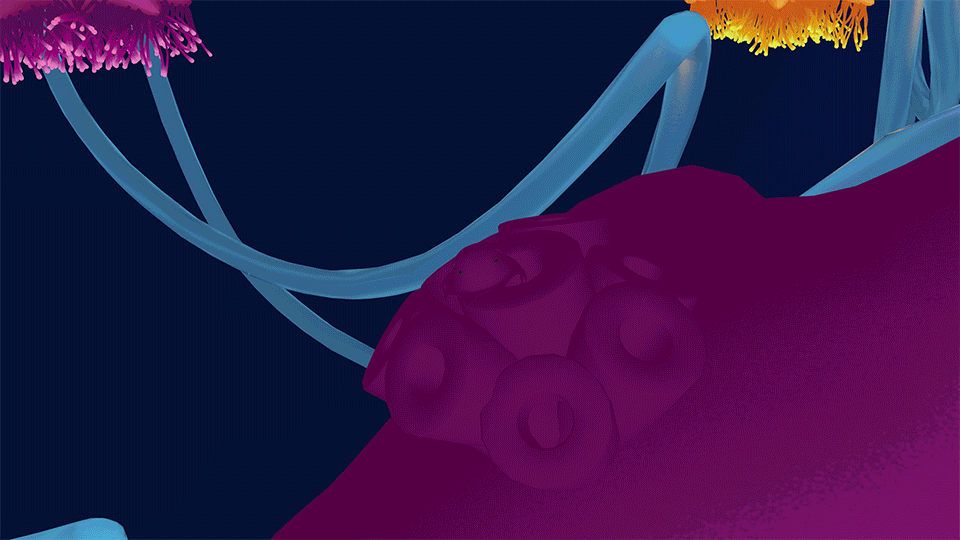
It is small, has ears, and is also a master of camouflage—all features which are highlighted in the model.
_gif.gif)
The octopus in this animation was inspired by the Dumbo Octopus, which exists in real life.
2 - 3D Modeling
The trees were modeled inside of Gravity Sketch in VR. The purpose of using this software was to emphasize the hand-crafted look of the scene and the organic jiggle of the jelly trees. The creatures, such as the manta ray, and the octopus, were made in Maya, and everything else was modeled in Cinema 4D.

OCTOPUS
Modeled in Maya.

STINGRAY
Modeled in Maya.

JELLY TREES
Modeled in VR using Gravity Sketch.
The environment was then assembled in Cinema 4D. Multiple shaders were used to generate a toon-style look for certain parts of the models. In the examples shown below, all of the models were rendered using a toon shader. However, in the final renders, the materials were changed so that the gelatinous objects in the scene were rendered with a gummy-like material in combination with certain parts rendered with a toon shader.


3 - Animation
Anemone
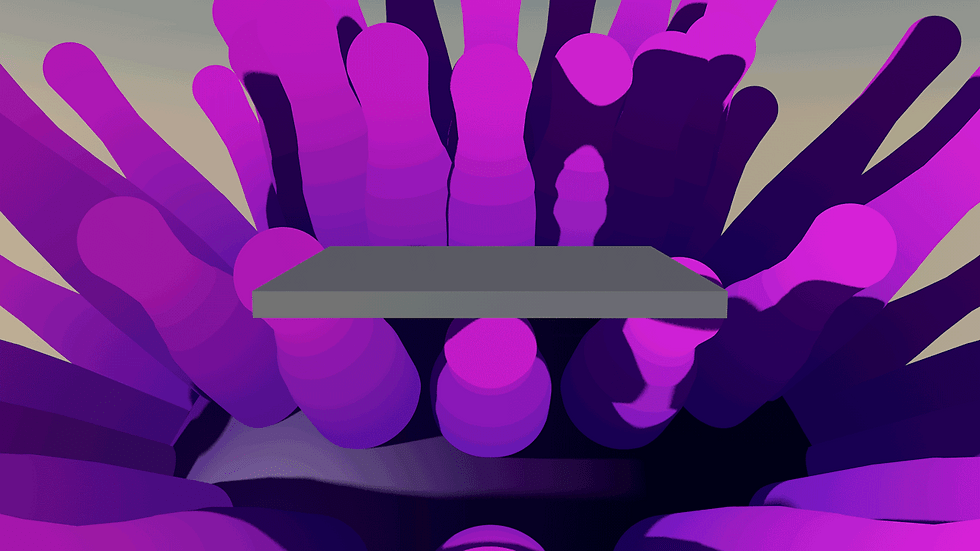
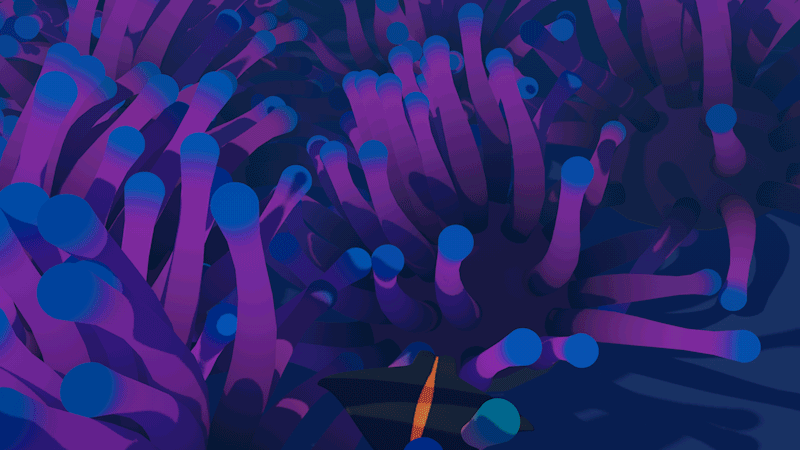
The first part of the process of animating the scene of the stingray swimming through the anemone forest involved setting collision fields to generate reactions when the manta ray approaches the anemone. Vertex maps and fields were used to indicate where and how each anemone hair should react to the passing manta ray. This was initially tested using a cube in place of the stingray model.

These anemone clusters were then duplicated to form the environment. Additional features were added such as the rate at which the anemone rise after they shrink, the color change when they shorten, and the radius of space that the manta ray effects when it swims. The shrinkage was done by essentially creating a collision field. The vertex map on the anemone detects when it faces a collision with the field around the manta ray and it reacts accordingly. This was done using a combination of vertex maps, effectors, and fields. The anemone were made using the hair simulator in C4D.


Jelly Trees
The key to making my animations resemble jelly was using the Jiggle object in C4D. This gave the trees a natural bounce. The jelly trees are meant to be reminiscent of boat propellers, which is why they first wind up and then spin. The momentum from their spin causes them to shoot up and then float slowly back down. The tree trunk scales to elongate it when it shoots up. This was combined with the Squash and Stretch effector which gives it a more cartoony movement.
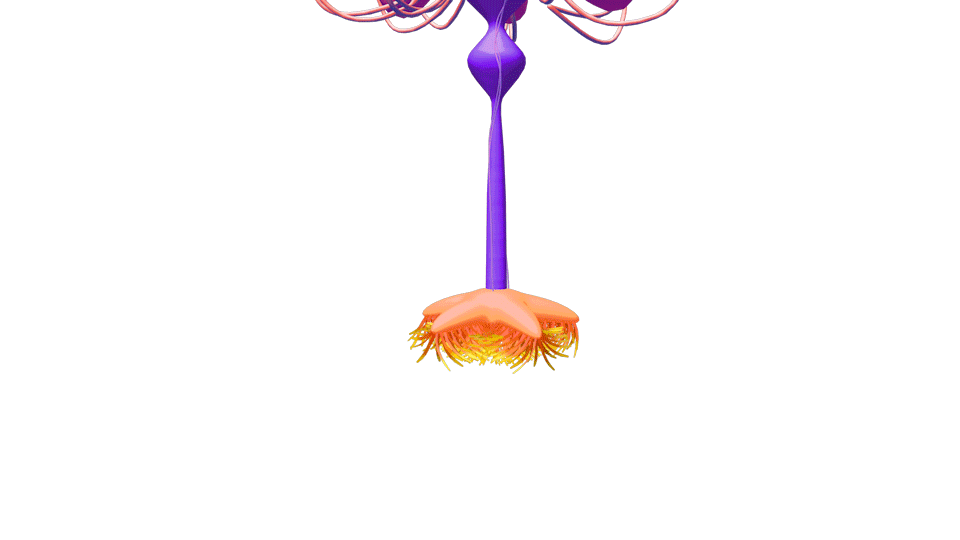
The coral plates at the bottom of the trees were later replaced with starfish. This helps fortify the sensation that the creatures in the environment exist in symbiotic relationships. The starfish grips onto the tree for support, and in return the starfish hair helps keep the tree afloat.
Flower
The environment is elegant and mysterious; the goal was to combine beauty with ferociousness. The flowers protect the organisms inside of the jelly cage from intruders, which is why the mechanism when they open and strike is highlighted. The strands of hair were created using the Hair simulator in C4D.
You've reached the end of the journey beneath the surface.